
Weight of Witnessing
Anne Marsh opening remarks for the launch of Weight of Witnessing exhibition.
SCROLL
YEAR
2025
Weight of Witnessing
Anne Marsh opening remarks for the launch of Weight of Witnessing exhibition.
The art historian in me wants to put the works we see here into a visual art context. To ask what are we seeing? On some levels the socio-political context dominates in this exhibition but I think the aesthetic, the medium, is the thing that strengthens the project.
What do we see? Paintings and sculptures that are responding to trauma testimonies from real people – we can read excerpts from these testimonies. The texts are powerful, over whelming, and brutally real. The voices of those who suffered are in the room. The paintings and sculptures are mute objects.
For me, the most significant part of this exhibition is the mediums that have been chosen by the artist in response to the testimonies. Hodge responds with paintings and sculptures. This is important because when it comes to war, national conflicts and human atrocities we are most familiar with the work by photo-journalists imbedded in the field and photos taken by the military or the dominant power.
Photography is problematic as an historical witness because so often it has been manipulated and, with the advance of digital imagery, photography and lens-based media lost all credibility as a true record. The dominance of Artificial Intelligence in the field is making it near impossible for a lens to represent ‘reality’. Fake news is everywhere, digital is the medium of the 21C and a juvenile AI is its puppet master.
How can we counter this when we want to represent atrocities and suffering? This may have been one of the questions that preoccupied the makers of the Weight of Witnessing.
The digital expo at the Abu Ghraib prison in Baghdad during the Iraq War (2003-2011) is in the cultural imaginary. American soldiers took performative photos showing themselves and their victims and distributed them to family and friends. Since then, the digital beast has grown much taller in a world where the human is fast being left behind. I think that this makes us come to value the testimony of people.
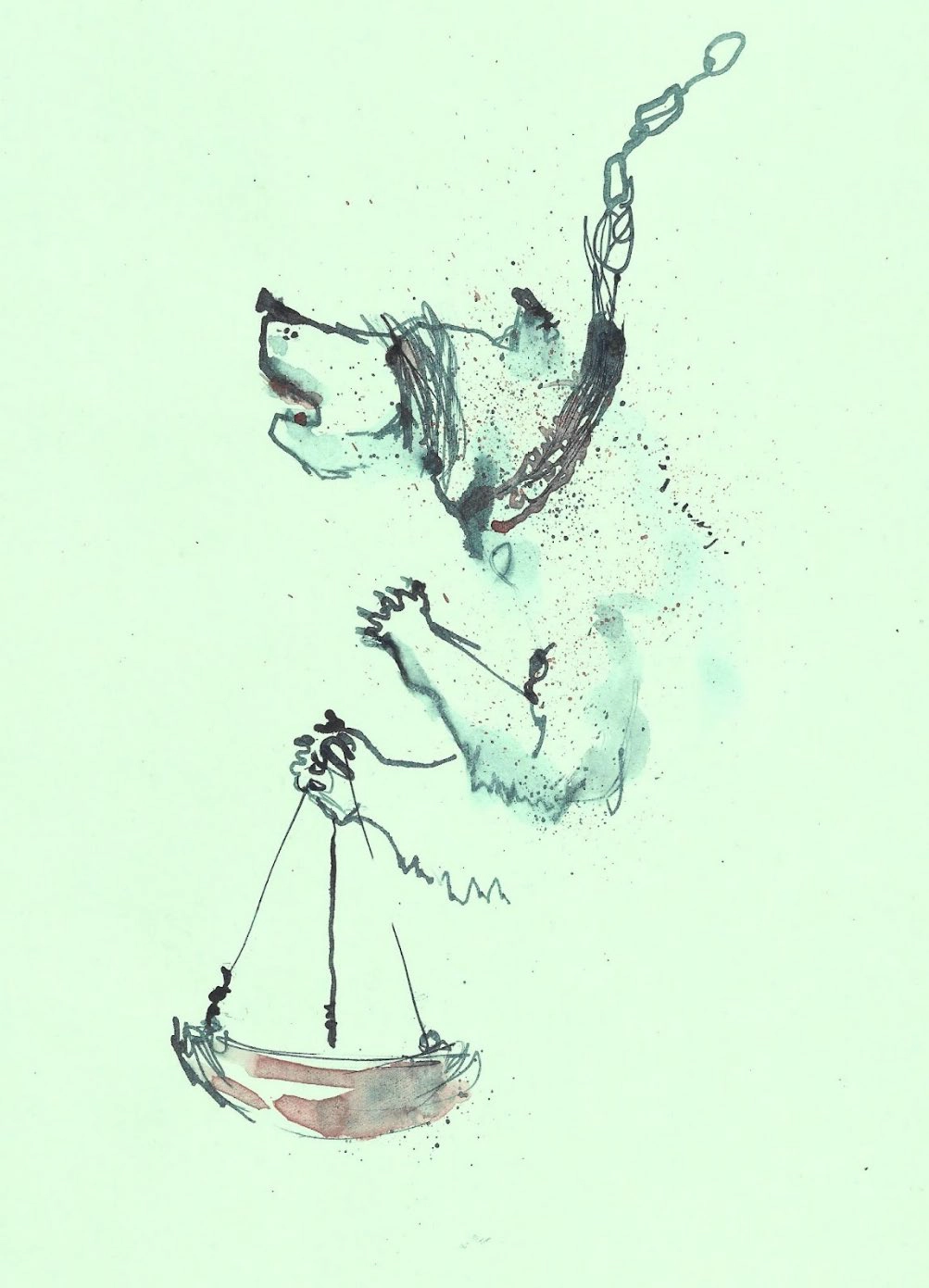
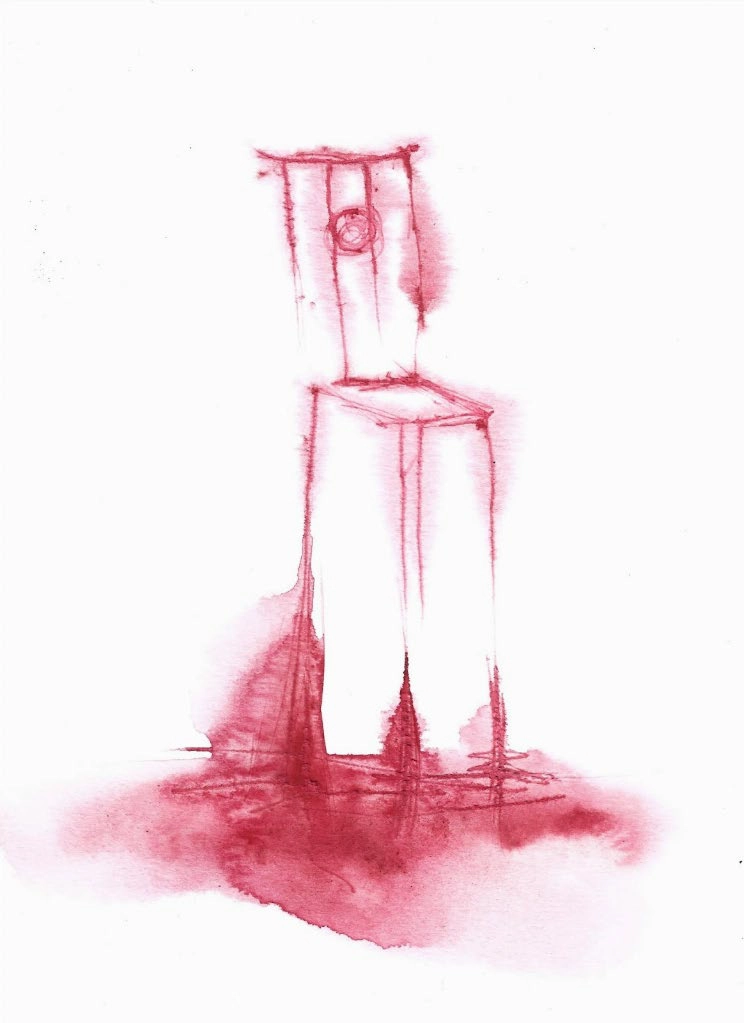
The images and objects that Martin Hodge creates in response to the testimonies of those who experienced torture are radically different to lens-based images. There is no spectacle art here, no grandiose statement. The water colour works are humble, like small poems, they tremble on the edge of our emotions.
The paintings often present as simple sketches, as the artist tries to place himself at the scene of the testimonies. Conscious of the problems associated with creating spectacle out of pain, Hodge’s work pays homage to those that suffered.
The sculptures develop and extend the artists thinking. These works become more metaphorical and symbolic. In the realm of sculpture different materials can be used to create a voice that comes from the work and resonates in the viewer’s mind. In short, the narrative of the paintings refer to imagery we have seen, or remember, from the history of visual culture. The crucified hanging image is etched into the cultural imaginary; the fierce dog; the bleeding mouth; these horrors are in art history as well as popular media. This is why the artist treads very gently in the visual domain.
In the sculptures Hodge has more room to move conceptually. I see this in Cage, a reproduction of a cage that held up to ten prisoners who were beaten through the bars until they became compliant. The artist creates the space where the torture happened and he stretches a translucent and embroidered cloth around the cage; everything is made in black and the work resonates as a kind of mourning shrine.
Art that matters and speaks loudly and clearly about socio-political trauma and conflict zones is brave and difficult art.
It is a privilege to be asked to open this important exhibition by Martin Hodge and Sevgi Sevgi Kılıç and I commend them both for creating a space where silenced voices can now be heard.
© 2026 professor ANNE MARSH | SITE BY jamie charles schulz